
How to Drink Turkish Coffee: A Short Guide
Order a coffee in Istanbul and the first question isn't how you like it — it's how sweet. Sade, az şekerli, orta, şekerli: no sugar, a little, medium, or sweet. That choice happens before the coffee is even made, because the sugar is cooked in with the grounds. Get the order right and you're set up to drink it the way people here actually do — slowly, in a small cup, with a glass of water on the side. Here's what to expect, from ordering to the last sip.
Order a coffee in Istanbul and the first question isn’t how you like it — it’s how sweet. Sade, az şekerli, orta, şekerli: no sugar, a little, medium, or sweet. That choice happens before the coffee is even made, because the sugar is cooked in with the grounds. Get the order right and you’re set up to drink it the way people here actually do — slowly, in a small cup, with a glass of water on the side. Here’s what to expect, from ordering to the last sip.
How To Order It
When someone asks how you take your coffee, they’re not asking about sugar you’ll stir in later. The sugar goes into the pot before it’s brewed, cooked together with the grounds and water in a small pot called a cezve. Sade means no sugar. Az şekerli means a little. Orta is a middle amount, and şekerli means sweet. Once you’ve chosen, that’s your coffee — you can’t fix it after it arrives, since the grounds settle at the bottom and stirring just brings them back up. Pick your sweetness once, at the counter, and that’s what you’ll get.
A Cup Size That’s Part Of The Ritual
The cup itself is small, more like an espresso cup than a mug, and that’s part of why the coffee is so strong. You’re not meant to fill up on it — a Turkish coffee is a short pause, not a large drink to carry around. That’s also why the sugar decision matters so much: with so little liquid, the sweetness comes through clearly in every sip. If you’ve never had a coffee this concentrated before, start with az şekerli. You can always order sade next time, once you know what you’re getting into.
Not Espresso, Not Filter Coffee
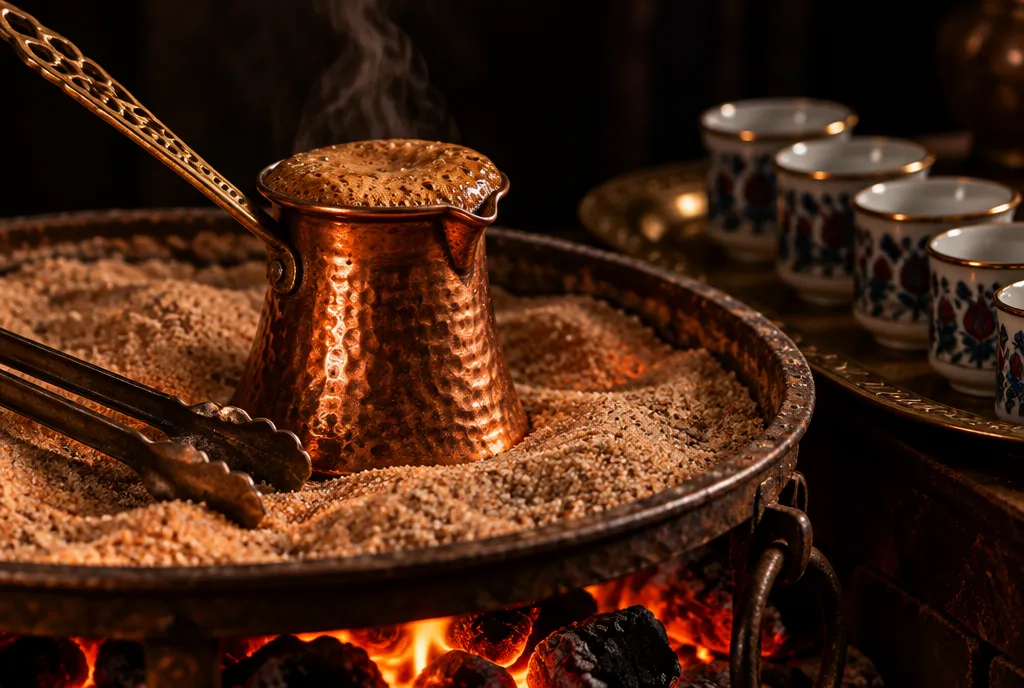
Turkish coffee isn’t made the way most visitors expect. Finely ground coffee, sugar and water go into the cezve together, then it heats slowly over a low flame, not a hard boil. As it heats, foam rises to the top. A good cup has that foam poured in first, with the rest of the coffee following behind it. There’s no filter and no machine involved — just a pot, low heat, and someone watching closely so it doesn’t boil over.
What Arrives At Your Table
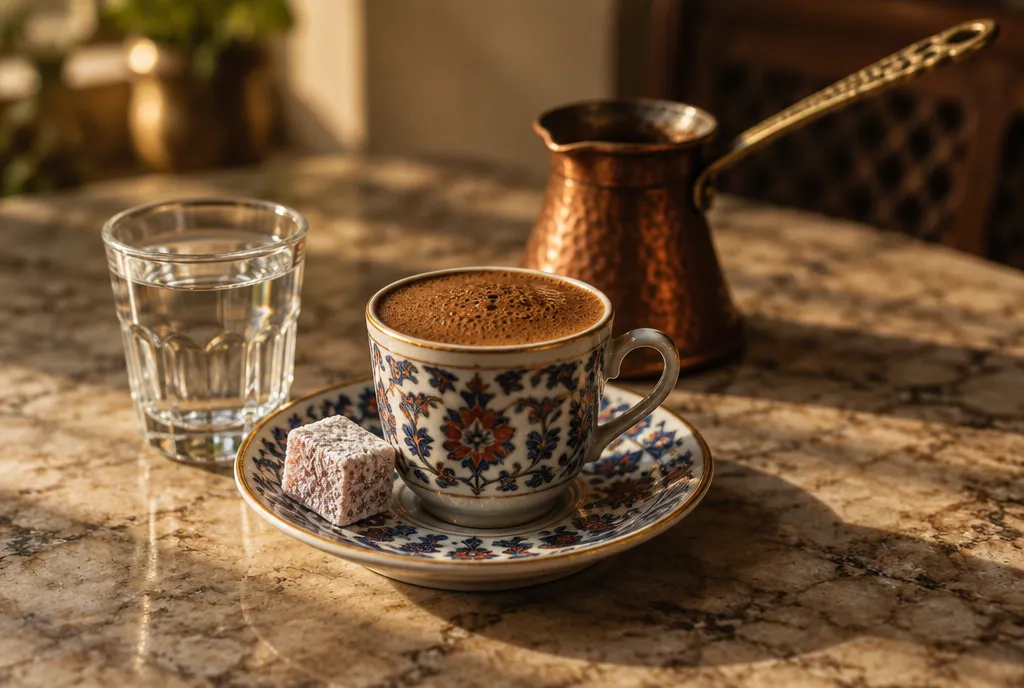
Turkish coffee comes in a small cup, usually with a thick layer of foam on top. Alongside it, you’ll get a glass of water. Drink the water before the coffee, not after. It clears your palate, so you actually taste the coffee instead of whatever you had before it. Some places also bring a small piece of lokum, Turkish delight, on the side. It’s a common pairing, though not something every café offers.
Why It’s Sipped, Not Gulped
Turkish coffee is unfiltered, so the fine grounds settle at the bottom of the cup as you drink. The last sip is thick and gritty, and that’s normal — it’s also the signal to stop. Nobody drinks all the way to the bottom. Hold the cup gently and tip it back slowly, just enough to get the liquid without disturbing what’s settled underneath. Rush it, and you end up with a mouthful of grounds, which nobody actually enjoys.
Reading The Bottom Of The Cup
Once the cup is empty, some people turn it upside down onto the saucer and let it cool. The idea is that the grounds inside leave shapes as they dry, and a friend can read those shapes and tell your fortune. It’s a playful tradition, more about the conversation than the prediction. Nobody sitting at that table actually expects the coffee to know what happens next — it’s an excuse to keep talking, not a serious reading.
Where People Drink It
You’ll find Turkish coffee in ordinary cafés, but also in the tea-garden style spots that serve both tea and coffee side by side. Around Küçük Ayasofya, the tea gardens near the water are a good place to try it, especially in the late afternoon when the light softens over the Marmara. Our neighbourhood guide covers more of what’s around here, tea houses included. It’s a slower kind of coffee than most visitors are used to, and the setting is part of the point.
A Habit, Not An Event
Coffee in Turkey isn’t rushed the way it can be elsewhere. Ordering one is often an excuse to sit for twenty minutes and talk, not something you drink standing up on the way somewhere else. Turkish coffee culture is even recognised by UNESCO as part of the world’s intangible cultural heritage, which says something about how seriously it’s taken here.
If you’re staying with us and want to know where to find a good cup nearby, ask at the desk. We’re on this street every day, and we know which places take it seriously. For everything else close to the hotel, our walking distances guide covers the neighbourhood. Our rooms page has the details if you’re still deciding where to stay. And you can always message us with questions before you arrive.