
Turkish Tea Culture: How and When It's Actually Served
Tea in Turkey isn't an afternoon ritual — it's an all-day one. Offered at breakfast, mid-morning, after lunch, in the evening, and to any guest who walks through a door, çay shows up constantly, poured from a two-part pot into small, tulip-shaped glasses. It looks delicate, but it's strong, and there's a whole set of small customs around how it's made and how it's ordered. Here's what to expect, and what "açık" and "koyu" actually mean when someone asks.
Tea in Turkey isn’t an afternoon ritual — it’s an all-day one. Offered at breakfast, mid-morning, after lunch, in the evening, and to any guest who walks through a door, çay shows up constantly, poured from a two-part pot into small, tulip-shaped glasses. It looks delicate, but it’s strong, and there’s a whole set of small customs around how it’s made and how it’s ordered. Here’s what to expect, and what “açık” and “koyu” actually mean when someone asks.
Poured From Two Pots, Not One
Turkish tea is brewed in a çaydanlık, a stacked pair of kettles. The bottom pot holds boiling water. The top one holds a small amount of loose tea, steeped strong in a little water from the pot below. To serve, the strong tea from the top pot is poured into a glass first, then diluted with hot water from the bottom, to whatever strength the drinker wants. That’s the whole system behind “açık” and “koyu.”
Açık Or Koyu: Strength, Not Type
When someone asks how you’d like your tea, they mean strength, not flavour — there’s only one kind of Turkish tea, just poured at different concentrations. Açık means light, mostly hot water with a splash of the strong tea on top. Koyu means dark, closer to straight tea with barely any water added. Most people land somewhere in the middle, and it’s completely normal to ask for a refill of either the water or the strong tea to adjust your own glass partway through.
Sugar On The Side, Never In The Pot
Tea arrives with a cube or two of sugar on the saucer, never already stirred in. You add it yourself, or you don’t. Some people run a sugar cube around the rim of the glass before the first sip instead of dropping it in. Milk isn’t part of the tradition here — if you ask for it, most places can find some, but you’ll get a slightly puzzled look along with it.
Small Glass, Constant Refills
The tulip-shaped glass is small on purpose — tea is meant to be drunk hot, and a small glass doesn’t have time to go cold before it’s finished. Don’t expect one glass to be the end of it, either. Refills come automatically in most places, and it’s normal to work through three or four glasses over the course of a long conversation. Waving off a refill is fine too; nobody will push more on you than you want.
Why The Glass Has No Handle
The glass has no handle, which looks impractical until you realise the shape is doing the work. The narrow waist stays cooler than the wider top and bottom, so you can hold it by the middle without burning your fingers, even right after it’s poured. It’s a small piece of design that’s been unchanged for a very long time, and once you’ve used one a few times, drinking tea from a mug feels almost wrong.
Where People Drink It
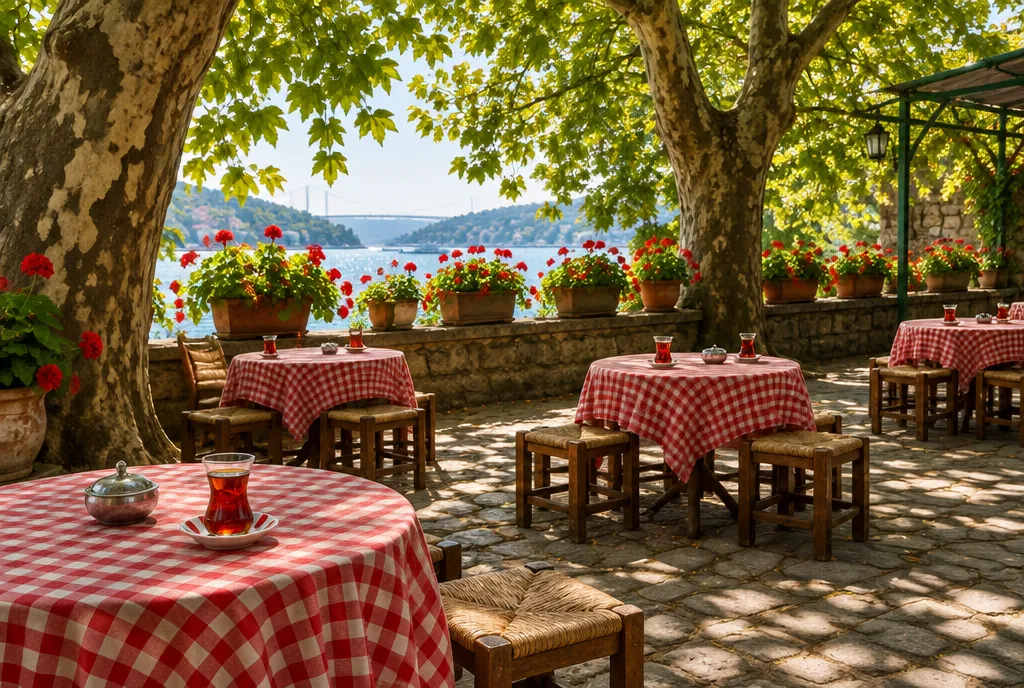
Tea happens everywhere, but the dedicated çay bahçesi — a tea garden with rows of small tables — is where it’s really at home. These sit in parks, along waterfronts, wherever there’s a bit of space and shade. Down toward the sea from Küçük Ayasofya, a few minutes past the hotel, there are tea gardens with a view of the ferries crossing to the Princes’ Islands. It’s one of the better ways to spend a slow hour in the late afternoon, watching the water instead of a screen.
Tea And Conversation, Not Rush
Ordering a single glass and leaving right after isn’t really how it works. Tea here comes with time attached — a meeting, a catch-up with a neighbour, a break between errands that turns into half an hour without anyone planning it. Waiters in a çay bahçesi won’t rush you to free the table, and nobody expects them to. If you’re used to coffee shops that turn tables quickly, this pace takes a moment to adjust to. Most visitors end up liking it more than they expected.
Tea As A Welcome
Visit someone’s home, or even a shop, and tea tends to appear within minutes, usually without being asked for. Turning it down outright can seem a little abrupt, though nobody will force the issue if you’d rather not. It’s less about the drink itself and more about the gesture — a quick way of saying you’re welcome here, sit down for a minute. If you’re staying with us, expect the same. Come down to the desk and there’s usually a glass on offer, no occasion required.
If you want the exact walking times down to the sea and the tea gardens along it, we’ve measured them. Our neighbourhood guide covers more of what’s around here. And if you’d like a recommendation for where to go, ask us directly — we’re on this street every day.