
Visiting Mosques In Istanbul: A Practical Guide
Istanbul has thousands of mosques, and visiting one is easy once you know a few basics. Most are open to visitors outside prayer times, and no ticket or invitation is required. The rules are less about restriction and more about respect for a place where people are actually praying. Here's what to expect before you go — what to wear, what to bring, and what to skip.
Istanbul has thousands of mosques, and visiting one is easy once you know a few basics. Most are open to visitors outside prayer times, and no ticket or invitation is required. The rules are less about restriction and more about respect for a place where people are actually praying. Here’s what to expect before you go — what to wear, what to bring, and what to skip.
What To Wear
Shoulders and knees should be covered, for both men and women. Loose trousers or a longer skirt work well; leave the shorts for the beach. Women are usually asked to cover their hair inside the prayer hall, and most major mosques keep a stock of scarves at the entrance for visitors who didn’t bring one. It’s worth carrying a light scarf anyway, especially in summer when you might duck into more than one mosque in a day. A loose outer layer — a shawl, a light jacket — covers shoulders just as well and packs down small.
Shoes Off, Bags Down
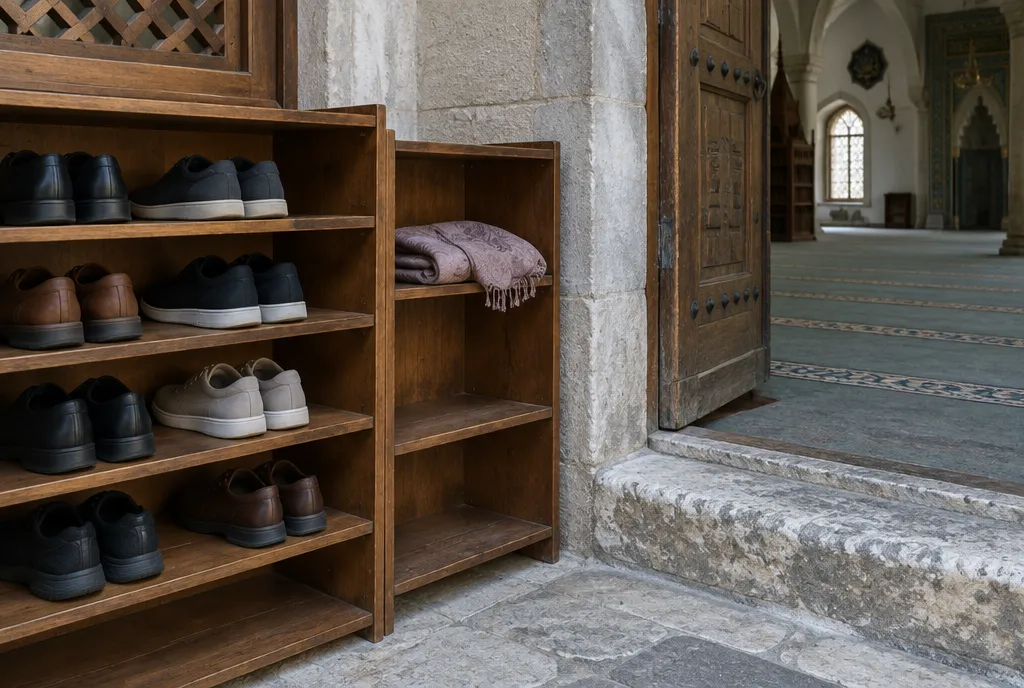
Shoes come off before you step onto the carpet, usually left on a shelf or a rack just inside the entrance. It’s the same rule for everyone, no exceptions for a quick look. Most mosques hand out a plastic bag if you’d rather carry your shoes than leave them on the shelf, which is worth doing in busier mosques where shelves fill up fast.
Timing Your Visit
Mosques hold prayers five times a day, and the exact times shift with the season, posted at the entrance rather than fixed on a clock. During prayer, the main hall is closed to sightseeing, and it’s not the moment to be walking around with a camera. Visits outside those windows are usually straightforward, and staff or volunteers at busier mosques can point you toward a good time if you ask. If a mosque looks closed to visitors when you arrive, it’s often just mid-prayer — wait a short while and it opens back up.
Around Ramadan
Mosques get busier during Ramadan, the month of fasting, when evening prayers draw larger crowds and some mosques stay open later than usual. It’s still fine to visit as a tourist during this period, but expect fuller courtyards and a livelier atmosphere after sunset, when people gather to break the fast nearby. If your trip lands during Ramadan, plan mosque visits for earlier in the day, and be ready for a slightly different rhythm to the neighbourhood after dark.
What You’ll See Inside
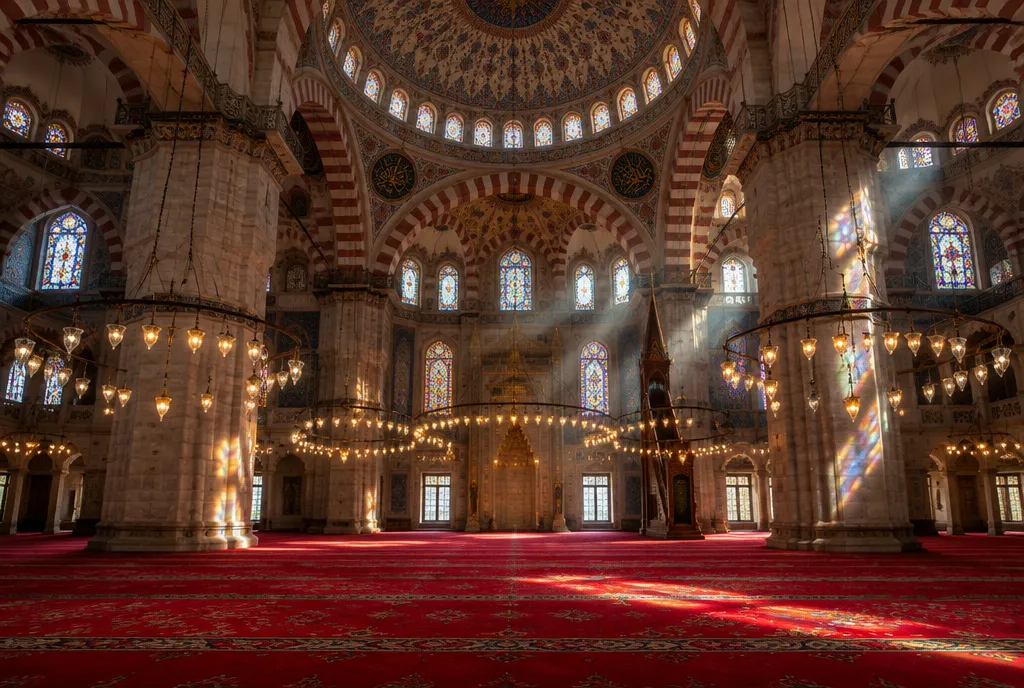
Once you’re inside, the layout is simple to read even if you’ve never visited a mosque before. There’s an open, carpeted floor instead of pews or chairs, since prayer here involves standing, bowing and kneeling in rows. A niche in the wall, the mihrab, marks the direction of Mecca, and everyone faces it during prayer. Most large mosques are lit by rows of hanging lamps, filled with intricate tile work and calligraphy rather than statues or paintings. Depicting people or animals isn’t part of the decorative tradition here. Non-Muslim visitors are welcome to sit quietly at the back or along the sides and simply take it in.
Photos, Voices, And Children
Photography is usually fine in the main hall, but skip flash and skip photographing people who are praying, even from a distance. Keep your voice down — it’s a functioning place of worship, not a photo backdrop, even when it’s also clearly a major sight on every visitor’s list. Children are welcome, and there’s no minimum age. Just plan for a quieter kind of visit than a playground, and expect to keep an eye on younger kids inside the prayer hall itself.
Entry And Etiquette
Most mosques don’t charge an entrance fee for visitors, though a donation box near the door is common and appreciated. There’s no need to book ahead for smaller neighbourhood mosques, only for a handful of the busiest sights in high season. Walk in quietly, keep to the edges of the prayer hall if people are praying nearby, and you’ll rarely get more than a friendly nod from anyone.
Right At Our Doorstep
You don’t have to go far to put any of this into practice. Küçük Ayasofya Mosque, a converted sixth-century church, sits about two minutes from Turna Hotel, and Sultanahmet’s Blue Mosque is about six. Hagia Sophia, an active mosque again since 2020, is around thirteen minutes on foot. If you want the exact walking times to all of these and more, we’ve measured them.
And if you’d rather have a straight answer about timing before you head out, ask at the desk. We can usually tell you whether a mosque nearby is between prayers or mid-service. For more on the street these mosques sit along, see our neighbourhood guide, or message us ahead of your trip.