
What to Buy in Turkey: A Guide to the Products, Not the Shops
Most souvenir guides send you to a shop. This one won't — shops close, staff change, and a shop that's good this year might not be next. What is worth knowing is the product itself. How real Turkish tea differs from the tourist tin. How to tell hand-painted ceramics from printed ones. And what actually survives a flight home. Learn that, and you can shop anywhere in this city with some confidence, including the streets a short walk from Turna Hotel. Here's what's worth bringing home, and how to choose it well.
Most souvenir guides send you to a shop. This one won’t — shops close, staff change, and a shop that’s good this year might not be next. What is worth knowing is the product itself. How real Turkish tea differs from the tourist tin. How to tell hand-painted ceramics from printed ones. And what actually survives a flight home. Learn that, and you can shop anywhere in this city with some confidence, including the streets a short walk from Turna Hotel. Here’s what’s worth bringing home, and how to choose it well.
Tea and Turkish Coffee to Take Home
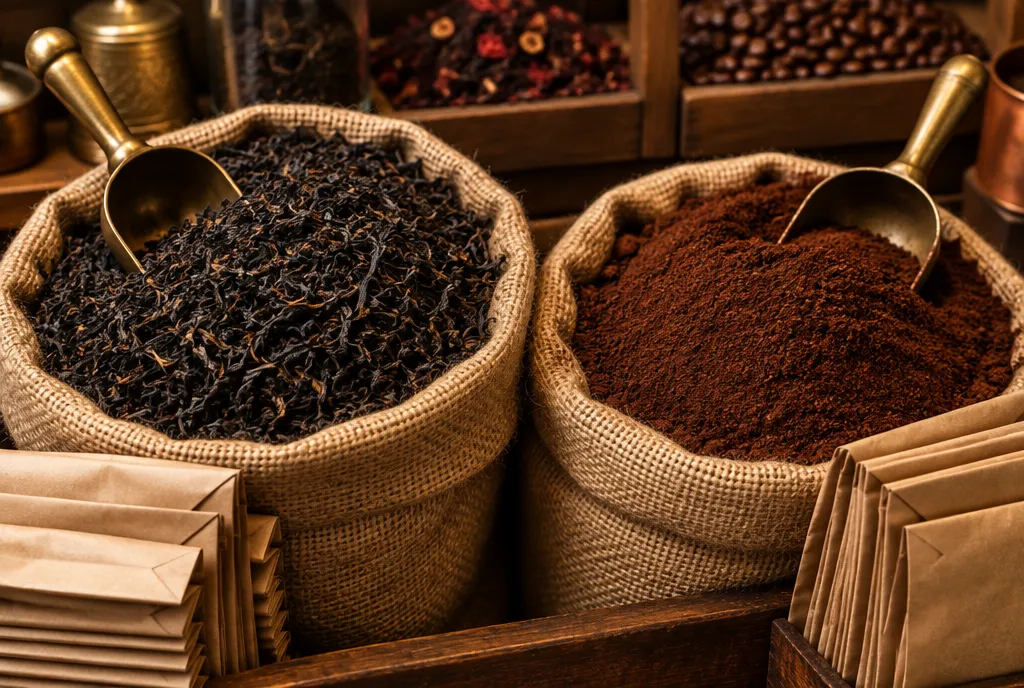
Loose-leaf Turkish tea travels far better than tea bags. Look for tins or bags labelled loose leaf, not the pre-bagged tourist boxes. For Turkish coffee, buy beans already ground specifically for it. The grind needs to be almost powder-fine, much finer than a normal filter grind, or it won’t work in a cezve at home. If you want the pot itself, a cezve is small, light, and easy to pack.
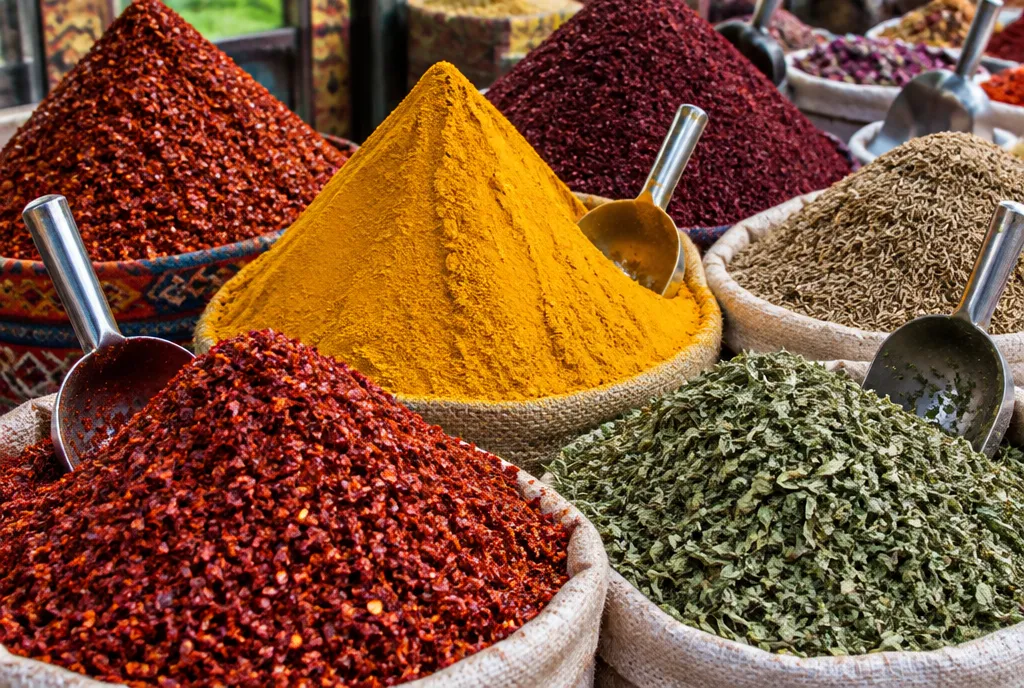
Spices Worth Packing
Sumak (sumac) is tart and deep red, sprinkled over salads and grilled meat. Pul biber is a mild-to-medium chilli flake with an oily texture, used on almost everything. Kuru nane is dried mint, used in soups and yoghurt dishes. When choosing any of these, go by colour. Vivid red or green means the spice is fresh. A faded, dusty-looking tin has likely been sitting on a shelf a long time.
Lokum and Baklava: How to Actually Get Them Home
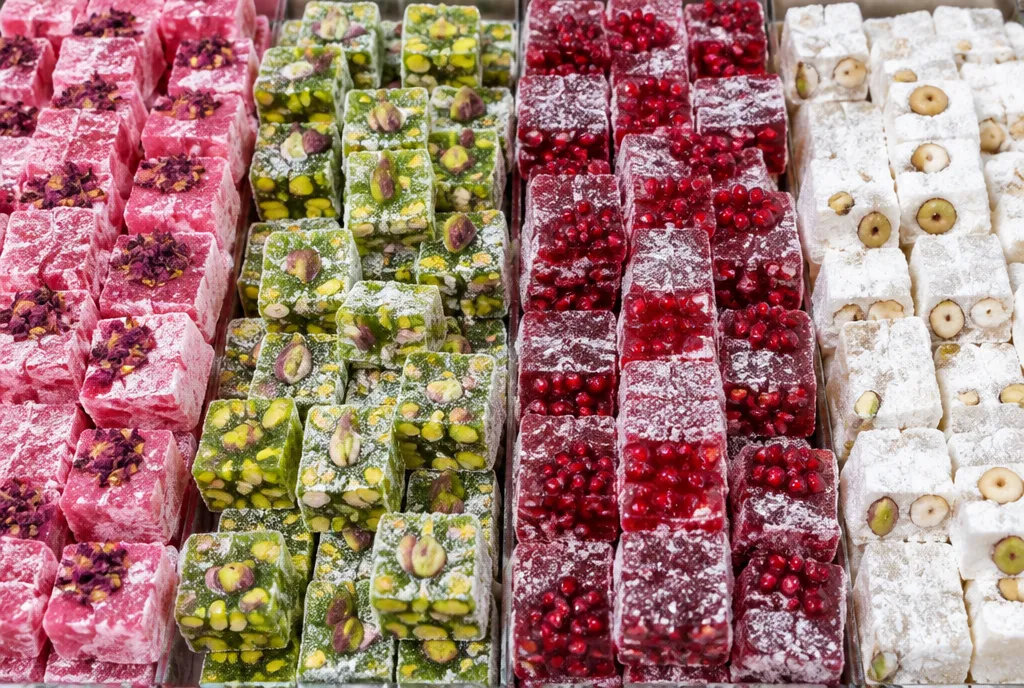
Lokum, Turkish delight, keeps well for weeks if it stays cool and dry — the problem is heat, not time. Leave it in a hot car or a sunny windowsill, and it turns into a sticky mess fast. Keep it in your cabin bag, not the boot of a taxi in August.
Baklava is more fragile. It’s soaked in syrup, and it doesn’t travel as well as lokum, especially over more than a day or two. If you’re set on bringing some home, buy it close to your flight, keep the box flat, and treat it as a short-trip souvenir rather than something to check into the hold.
Peştemal and Towels
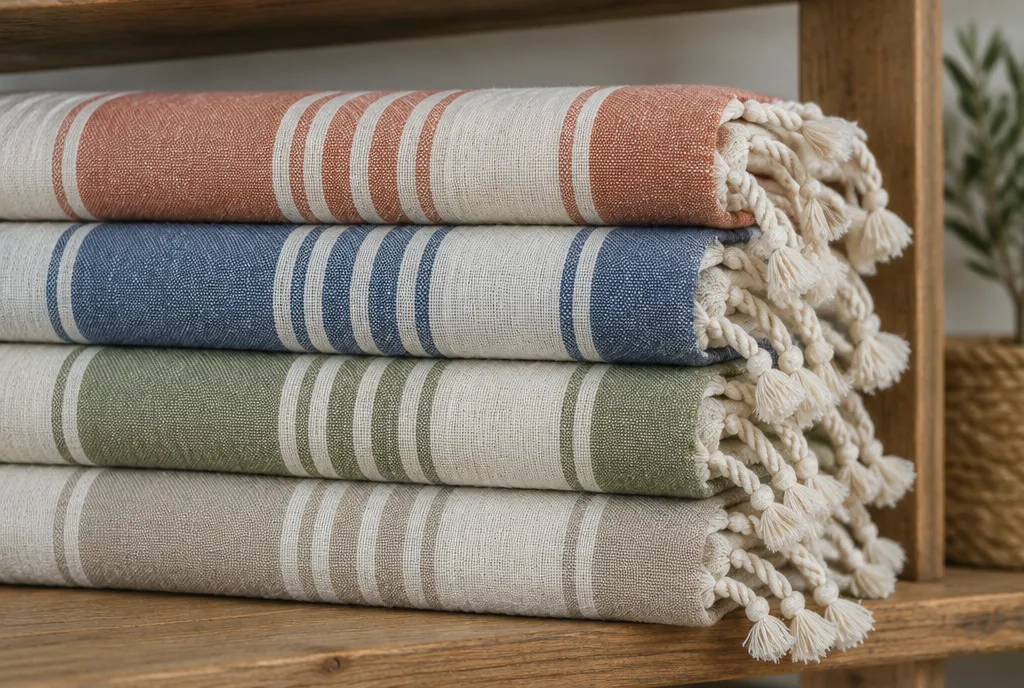
A peştemal is a thin, flat-woven cotton cloth, traditionally used in hammams, but it works just as well as a beach towel, a scarf, or a throw at home. Look for tight weaving and natural cotton. It should feel soft, not stiff or scratchy — a loose weave usually means a lower-quality piece. Turkish towels are a heavier, looped-pile version of the same idea, and more absorbent if that’s what you’re after.
Ceramics and Copper
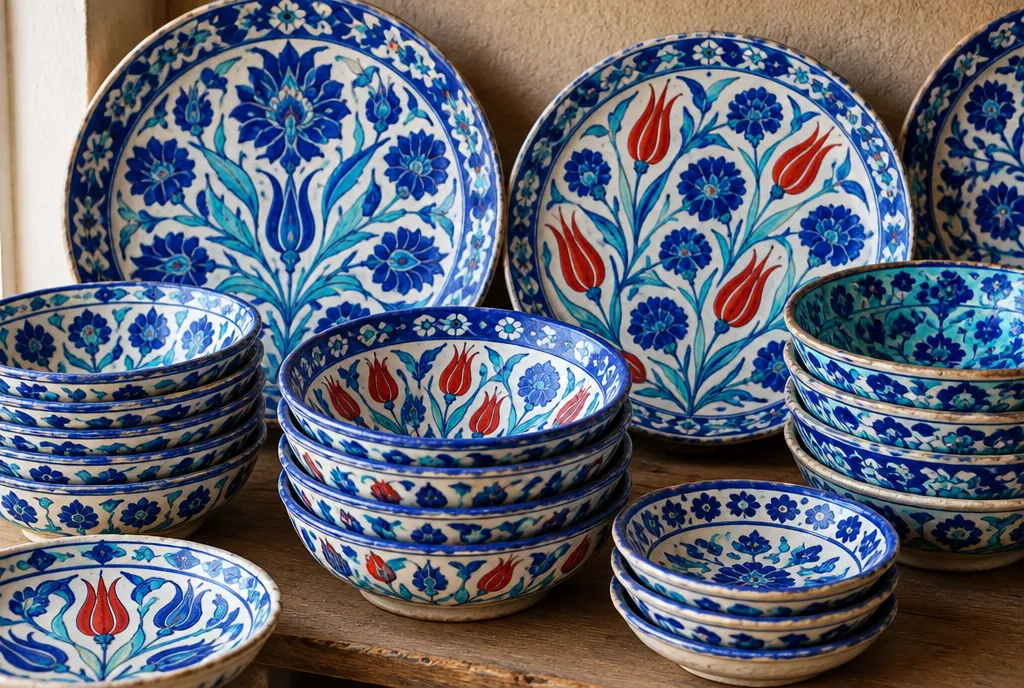
Ceramics with tulip and carnation patterns, in the İznik style, are one of the more recognisable things to bring home. To tell hand-painted pieces from printed ones, look closely at the brushwork. Slight unevenness and small variations between similar pieces usually mean it was painted by hand. A pattern that repeats perfectly, tile after tile, was probably printed on.
Copper trays and cezves are common too. Solid copper is heavier than copper-plated metal, and a magnet won’t stick to it. If a magnet grabs on, there’s steel underneath the copper coating. Cookware should have a tin lining inside — that’s normal, and it’s what makes the piece safe to actually cook or serve food in.
The Evil Eye
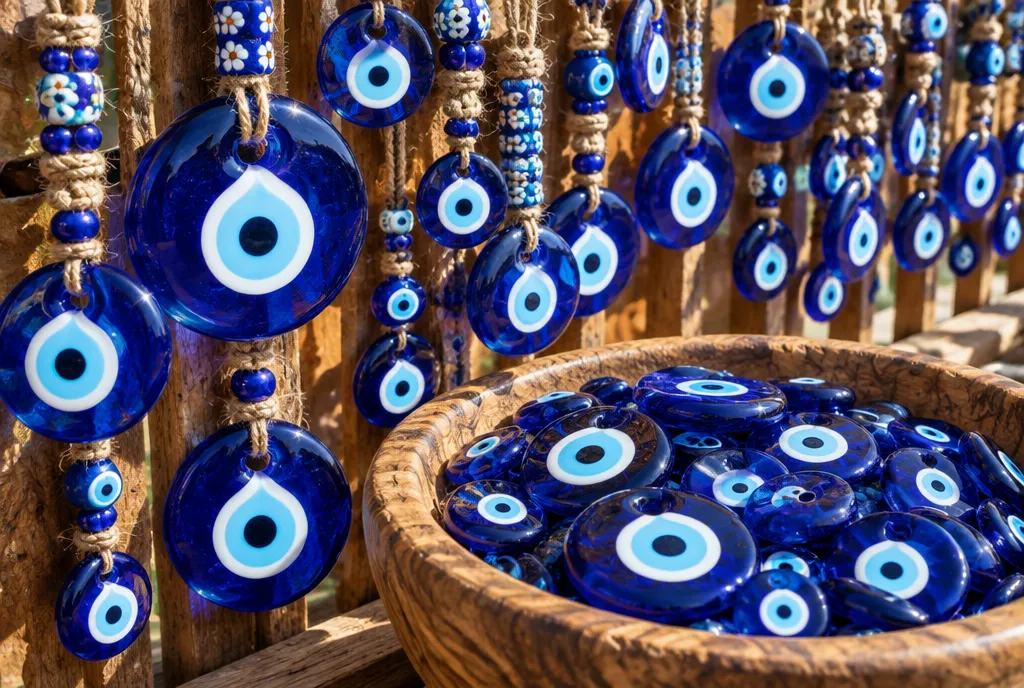
Nazar boncuğu, the blue-and-white glass eye, is everywhere — on keychains, bracelets, and large wall hangings. It’s believed to turn bad luck away from whoever carries or wears it. Whether or not you take that seriously, it’s a small, sturdy, easy-to-pack thing that doesn’t pretend to be anything fancier than what it is.
Soap, Rose Products, and Small Things
Olive oil soap from the Aegean coast is solid, plain, and travels well. There are no liquid restrictions to worry about, and it lasts a long time in a cupboard. Rose water and rose-based cosmetics are lovely, but they’re liquids, so they’re subject to whatever the carry-on limit is on your flight. Check the rule before you fly, since it can vary and change. Dried fruit, nuts, and pistachios, especially from the Gaziantep region, pack well in vacuum-sealed bags and make an easy, useful gift.
The Grand Bazaar, Fifteen Minutes From Here
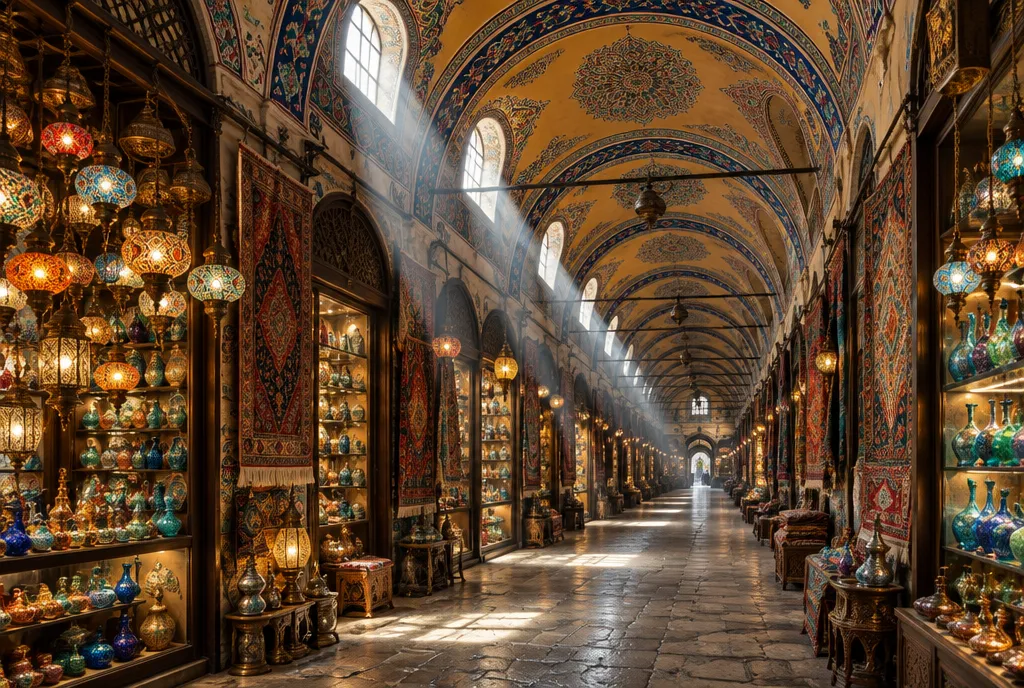
Kapalıçarşı, the Grand Bazaar, is about fifteen minutes on foot from Turna Hotel. It’s one of the oldest covered markets in the world, with thousands of small stalls loosely grouped by trade — textiles in one stretch, jewellery in another, ceramics somewhere else. It’s easy to get turned around in on your first visit. That’s normal, and part of what makes it worth wandering rather than rushing through with a list.
How Bargaining Actually Works
In the bazaar and in most small shops without a price tag, some back-and-forth on price is expected and welcome. Fixed-price shops and supermarkets are the exception here, not the rule. A friendly opening offer below the asking price is normal, not rude. Take your time, be pleasant about it, and walking away is always fine — sometimes the price improves the next day, if you happen to pass the same stall again. Cash tends to help more than a card when you’re negotiating.
Before You Pack It All In
Customs and duty-free rules do change, and it’s worth checking the current allowance for your home country before you fly, rather than relying on what any guide says. None of that changes what’s actually worth buying here. The tea, the spices, the ceramics — all hold up on their own once you know what you’re looking at. If you want a second opinion on any of it while you’re staying with us, ask at the desk; we’re on this street every day. For more on what’s around the hotel, read our neighbourhood guide, check our rooms, or message us before you arrive.