
What to Eat in Istanbul: A Guide to the Food, Not the Restaurants
Ask ten people what to eat in Istanbul, and most will hand you a list of restaurant names. That list goes out of date fast — places close, chefs move on, and today's favourite spot might not exist next year. What doesn't go out of date is the food itself. Learn what menemen is, or how coffee is properly served, and you can order well anywhere in this city, including near Turna Hotel. Here's what to look for on a menu, how it's eaten, and when.
Ask ten people what to eat in Istanbul, and most will hand you a list of restaurant names. That list goes out of date fast — places close, chefs move on, and today’s favourite spot might not exist next year. What doesn’t go out of date is the food itself. Learn what menemen is, or how coffee is properly served, and you can order well anywhere in this city, including near Turna Hotel. Here’s what to look for on a menu, how it’s eaten, and when.
Breakfast, the Turkish Way
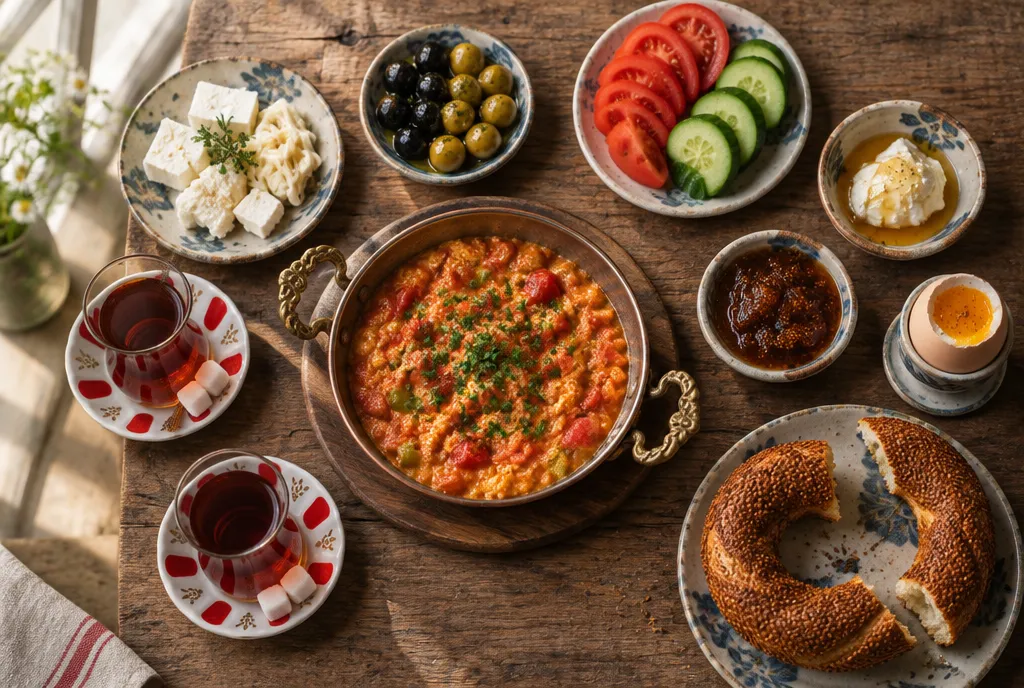
Turkish breakfast is a spread, not one dish. A full kahvaltı covers a table: white cheese (beyaz peynir), olives, tomatoes, cucumber, jam, honey with kaymak (clotted cream), and fresh bread. Menemen is the hot dish on the side — eggs cooked with tomato and green pepper, sometimes with cheese, served straight from the small pan it was cooked in. Simit, the sesame-crusted bread ring sold from carts across the city, is the fastest breakfast there is. Eat it plain, or split it and add cheese. Turna Hotel doesn’t serve breakfast on site. Ask at the desk, and we’ll point you to somewhere nearby that does it well.
Tea and Turkish Coffee, Two Different Rituals
Çay comes in a small tulip-shaped glass, poured from a double kettle called a çaydanlık. Strong tea brews in the top pot, and hot water sits in the bottom one to dilute it to taste. It gets offered constantly — in shops, in offices, between courses at a meal. Saying yes is normal, even if you’ve already had three glasses that hour.
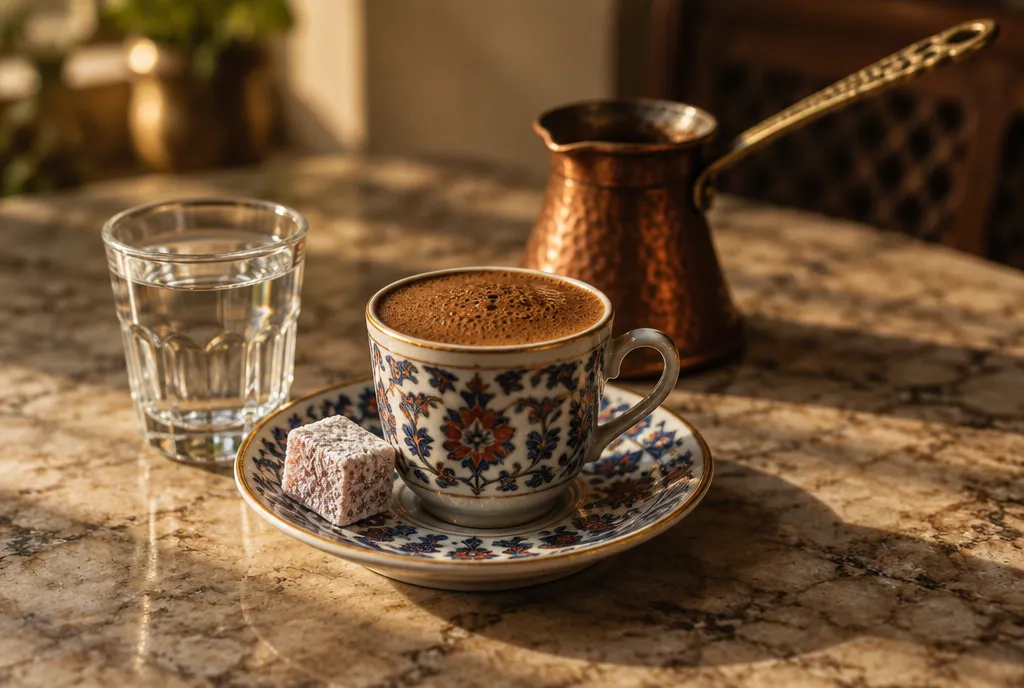
Turkish coffee is a different drink entirely. Very finely ground beans are boiled with water in a small pot called a cezve, then poured into the cup unfiltered. The grounds settle at the bottom, so sip slowly and stop before you reach them. It’s usually served with a small glass of water on the side, and sometimes a piece of something sweet. Some people read the pattern the grounds leave in the empty cup afterwards — a light tradition, not something to take too seriously.
The Main Plates
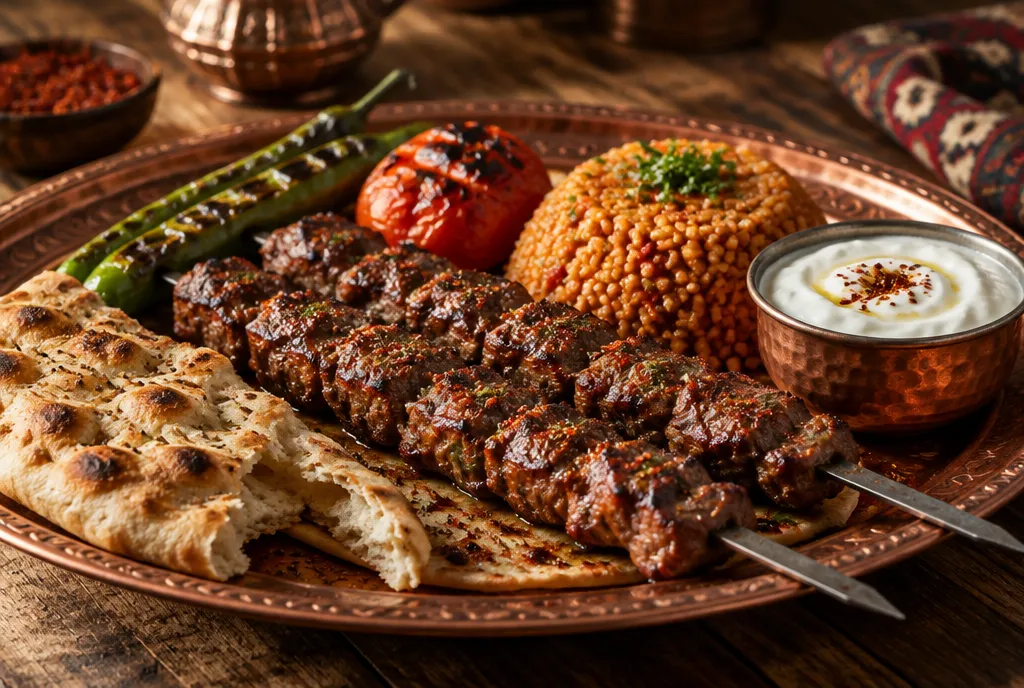
Kebap covers a wide range of dishes, not just one. Adana kebap is minced meat, spiced and a little hot. Urfa kebap is the same idea, milder. İskender is different again — döner meat sliced over pieces of bread, with tomato sauce and yoghurt poured over the top.
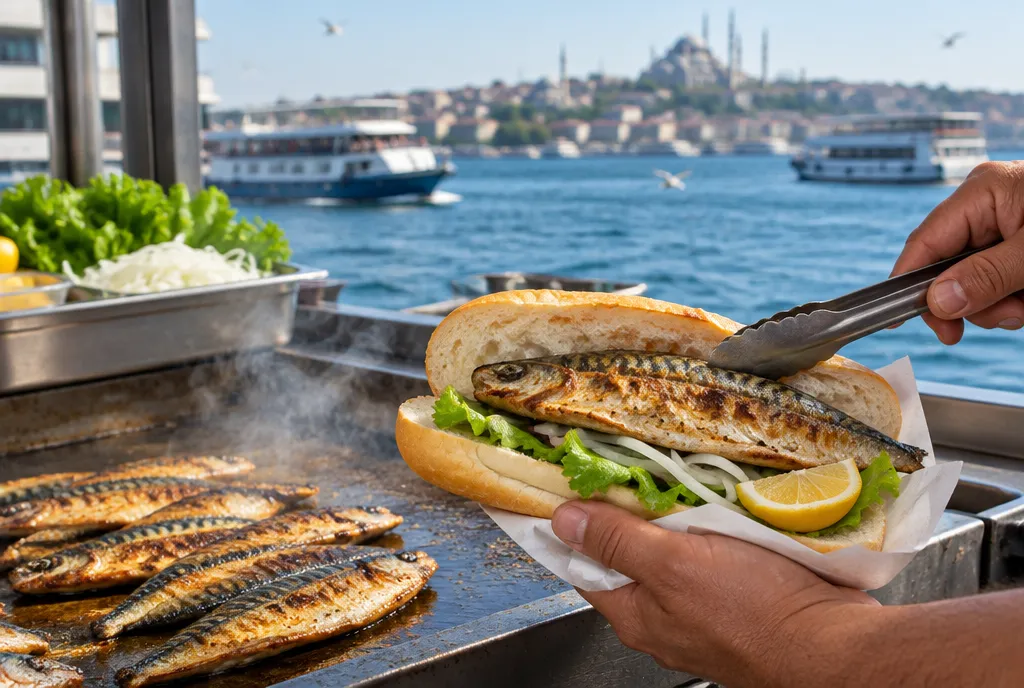
Balık ekmek is a grilled fish sandwich, traditionally eaten standing near the water, with onion and a squeeze of lemon.
Mantı are small dumplings filled with minced meat, boiled, then topped with yoghurt and a garlic sauce, sometimes with melted butter and red pepper on top.
Lahmacun is a thin, crisp flatbread topped with minced meat, tomato, and pepper. It’s folded in half and eaten with your hands, with lemon squeezed over it first.
Pide looks like a boat-shaped flatbread, topped with cheese, meat, or egg, baked until the edges turn crisp.
Köfte are grilled meatballs, and every region makes them a little differently.
Street Food You Eat While Walking
Simit belongs here too — the true street breakfast, sold warm from carts from early morning. In the colder months, kestane (roasted chestnuts) get sold from small carts, warm in a paper bag. Mısır is corn on the cob, grilled or boiled, sold from carts near busy corners. Midye dolma are mussels stuffed with spiced rice, sold a few at a time on a tray, usually with a squeeze of lemon. They’re a common late-evening snack, sometimes alongside a small glass of rakı, though that pairing is entirely optional.
Something Sweet
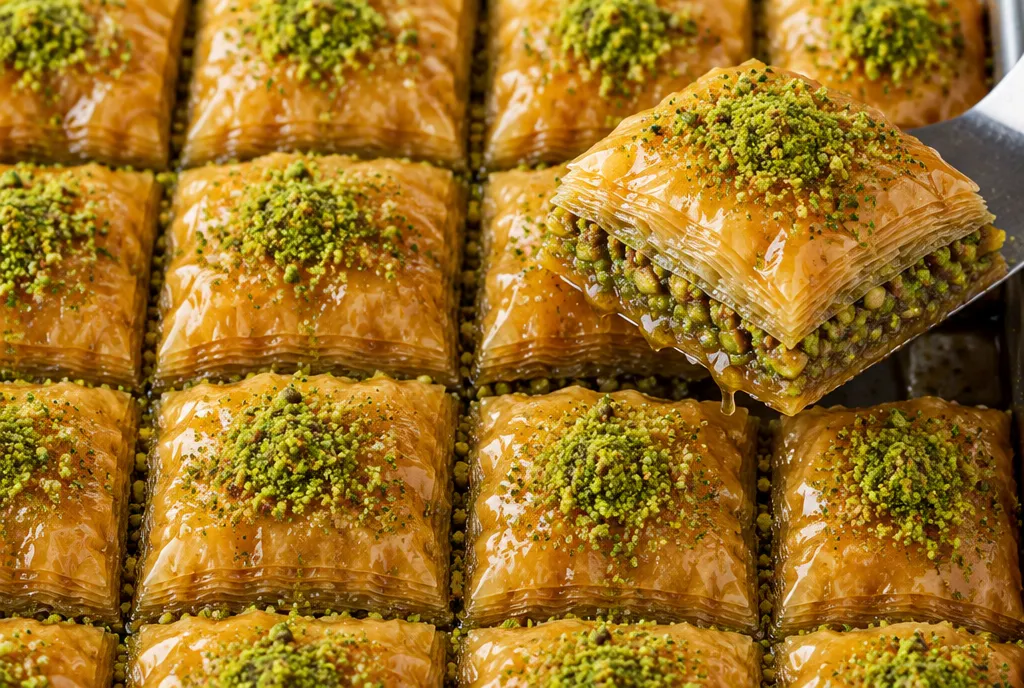
Baklava is thin layers of pastry with chopped nuts, soaked in syrup after baking. It’s rich, so a small piece is usually enough. Künefe is a hot dessert — shredded pastry with a cheese filling, baked until the edges are crisp, served with syrup while it’s still warm and the cheese still stretches. Sütlaç is a baked rice pudding, with a caramelised top from time in the oven. Lokum, known abroad as Turkish delight, comes in small cubes dusted with powdered sugar, in flavours from rose to pistachio. Dondurma is Turkish ice cream, chewier than most, thanks to salep and mastic in the mix — you’ll often see it scooped with a theatrical flourish.
If You Don’t Eat Meat
Istanbul has more for vegetarians than it first looks like it does. Mercimek çorbası, red lentil soup, is smooth, cheap, and on almost every menu — ask for lemon and chilli flakes on the side. Zeytinyağlılar are vegetables cooked slowly in olive oil and served cold: artichokes, green beans, stuffed peppers, all common. A plate of mezes works well too. Ezme (a chopped tomato and pepper spread), haydari (yoghurt with garlic and herbs), and patlıcan salatası (smoky aubergine) all travel well as a shared starter, and none of them need meat added.
Other Drinks Worth Knowing
Ayran is a salted yoghurt drink, thin and cooling, and the standard pairing for grilled meat, especially köfte. Şalgam is fermented turnip and carrot juice — salty, sour, and an acquired taste, more common in the south but easy to find here too. Boza is thick, sweet, and slightly fermented, made from millet, and mostly a winter drink, topped with cinnamon and roasted chickpeas (leblebi).
Ordering Without Knowing a Single Name
None of this requires knowing where to go. Walk into any place that’s busy with locals at lunchtime, and point at what looks good. Ask at the desk if you want a steer — we eat this food every day too, and we’re happy to explain what’s on a menu you can’t read yet. For more on the street our hotel sits on, read our neighbourhood guide to Küçük Ayasofya, or check our rooms if you haven’t booked yet. Questions before you land? Message us directly.